

What Is an Engine Cleaner and Degreaser?
Engine Cleaner Formulation and degreaser is a liquid made to break down oil, grease, and road grime that builds up on engine parts. It’s not the same as your regular car shampoo. Your car shampoo handles paint. Degreaser handles the tough, oily buildup sitting on metal, plastic, and rubber components under the hood.
Think about what your engine actually goes through. Oil leaks a little here and there. Road dust sticks to that oil. Heat bakes it all into a crusty layer over months. Regular soap and water won’t touch that. You need something with real solvent power or strong surfactants to break the bond between grease and metal.
Most degreasers fall into two camps. There’s solvent based degreaser, which uses petroleum distillates or citrus based solvents to dissolve grease on contact. Then there’s water based degreaser, which relies on strong surfactants and alkaline builders to lift grease away without harsh fumes. A lot of people search for water based degreaser formulation these days because it’s safer to use in a garage without proper ventilation, and it’s easier on rubber hoses and plastic trim than aggressive solvents.
Industrial shops usually go a step further. If you’ve ever looked up how to make industrial degreaser, you’ll notice these formulas lean heavier on alkalinity and stronger surfactant blends because they’re dealing with years of caked on grease in factory settings, not just a family car that gets washed twice a month.
Now here’s something most articles skip. Engine degreaser isn’t a one size fits all product. A light degreaser made for a monthly engine bay wipe down is a completely different formula from a heavy duty degreaser formulation built for shops that deal with decades old grime on tractors, trucks, or shop floors. If you search for heavy duty degreaser formulation pdf, you’ll usually find these have higher concentrations of active ingredients and sometimes include chelating agents to grab onto metal ions trapped in old oil residue.
People also look for a homemade heavy duty engine degreaser because store bought stuff can get expensive fast, especially if you’re cleaning engines often. Mixing something basic at home is possible, but getting it strong enough to compete with commercial products without damaging rubber seals or paint takes real formulation knowledge, not just guessing with dish soap and baking soda.
So before you even think about how to make engine cleaner and degreaser formulation guide style products, you need to understand this split. Are you making something gentle for weekly maintenance, or something aggressive for stripping years of grime? That single decision shapes every ingredient choice that comes next.
What Makes a Good Engine Degreaser?
A good degreaser isn’t just about strength. Plenty of harsh chemicals can strip grease, but they’ll also eat through your paint, crack your rubber hoses, or leave your aluminum parts looking dull and corroded. Good formulation balances cleaning power with safety for the surfaces it touches.
First thing that matters is cleaning power itself. This comes from a mix of surfactants, solvents, and sometimes alkaline builders working together. Surfactants alone can struggle with really thick grease, so a lot of formulas blend in a small percentage of solvent to help break the oil down faster before the surfactants finish the job.
Second is material compatibility. Your engine bay has rubber hoses, plastic clips, painted metal, and sometimes aluminum or chrome parts. A degreaser that’s too alkaline can turn aluminum dull or even black over time. This is why pH control matters just as much here as it does in car shampoo and wax formulas, just at a different range since degreasers usually sit on the alkaline side rather than neutral.
Third is dwell time and rinseability. A good degreaser should cling to vertical or angled surfaces long enough to break down grease before it drips off, then rinse away clean without leaving a soapy film that attracts more dust.
Fourth is safety and fumes. Solvent heavy formulas can be harsh to breathe in an enclosed garage, which is part of why water based degreaser formulation has gotten more popular with home users and small shops that don’t have industrial ventilation systems.
Ingredients Used in Engine Cleaner Formulation and Degreaser
Every degreaser starts with a surfactant blend. These grab onto grease molecules and pull them away from metal surfaces so water can rinse them off. Most formulas mix anionic surfactants for strength with non ionic ones for better grease penetration.
Next comes the solvent portion. This can be a citrus based d limonene, a glycol ether, or in stronger industrial blends, a petroleum distillate. Solvents dissolve grease directly instead of just lifting it, which is why heavy duty degreaser formulation pdf guides usually list a higher solvent percentage than light duty ones.
Alkaline builders come next, usually something like sodium hydroxide or sodium metasilicate. These raise the pH so the formula can break down oily residue faster, especially baked on grime that’s been sitting for months. Chelating agents get added in tougher formulas to grab metal ions trapped in old grease, which helps prevent streaking after rinsing.
Water makes up the biggest chunk of the formulation, usually 60 to 80 percent, especially in water based degreaser formulation where you’re avoiding harsh solvents altogether. Fragrance and dye go in last, mostly to mask the chemical smell and give the product a cleaner look in the bottle.
How Engine Degreaser Ingredients Work
Surfactants work by surrounding grease molecules and separating them from the metal surface, kind of like tiny magnets pulling dirt into the water instead of letting it stick.
Solvents work differently. They actually dissolve the grease at a molecular level, breaking thick buildup into a thinner liquid that surfactants can then carry away easily.
Alkaline builders speed up this whole process by weakening the bond between grease and metal, which is why heavy grime breaks down faster once pH goes up.
Chelating agents work quietly in the background, locking onto metal ions so they don’t interfere with cleaning power or cause streaks once everything dries.
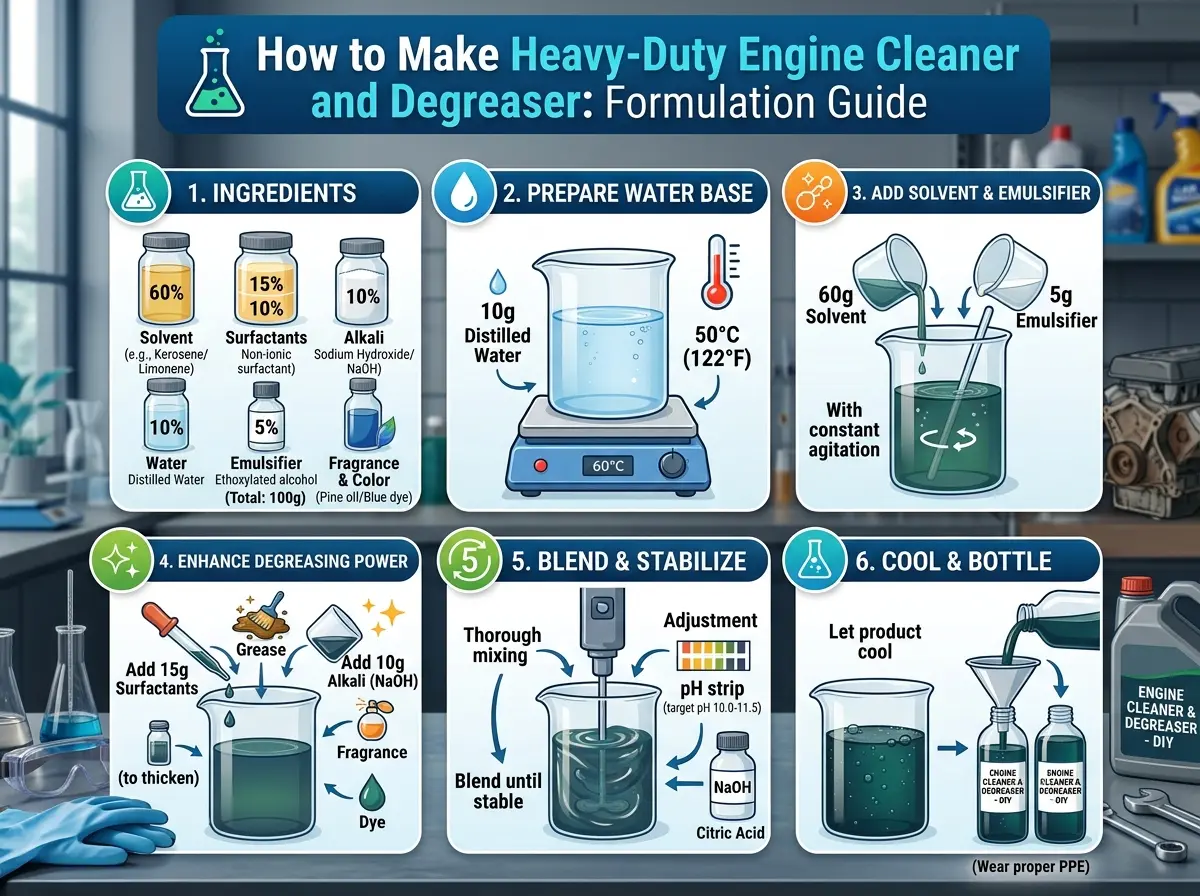
Engine Cleaner Formulation and Degreaser Process
Making a degreaser follows a pretty clear order once you understand why each step matters. Rushing any part of this usually leads to a weak product or one that separates on the shelf after a few weeks.
You start with water in your mixing tank. Since water usually makes up 60 to 80 percent of the formula, getting this base right matters more than people think. Deionized water works best here because tap water has minerals that can mess with how your surfactants perform later.
Once your water base is ready, you add your alkaline builder first, something like sodium metasilicate or a small amount of sodium hydroxide. This needs to go in slowly while the mixer runs on low speed. Dumping it in fast can cause a reaction that heats up the tank quicker than you want.
After the pH is where you need it, surfactants go in next. Add these slowly too, because fast mixing at this stage creates way too much foam and makes it hard to judge how the batch is actually coming together. Anionic surfactants usually go in first, followed by non ionic ones a few minutes later.
If your formula includes solvent, like a citrus based d limonene or a glycol ether, this is the point where it gets blended in. Solvents need gentle mixing since aggressive blending can cause separation later, especially if you’re building a heavy duty degreaser formulation meant to sit on shelves for months before use.
Chelating agents come in near the end, right before fragrance and dye. These need to be added last because heat from earlier mixing steps can weaken fragrance oils, and nobody wants a degreaser that smells like nothing after two weeks in the bottle.
Once everything’s blended, you test the pH again to make sure nothing shifted during mixing. Then comes a small batch test on real grease, either on an old engine part or a metal panel coated in motor oil, just to see how it performs before scaling up to a full production run.
Important Factors When Formulating Engine Degreaser
A few details separate a strong degreaser from one that just sits in the bottle looking impressive. Getting these right is what actually makes the difference between a product people repurchase and one they toss after one use.
Water quality is the first thing to watch. Hard water throws off surfactant performance and can even cause cloudiness in the final product. This is a small detail a lot of home formulators skip, and it shows up later as inconsistent batches.
pH control matters just as much here as with car shampoo, just at a different range. Most degreasers sit somewhere between 10 and 13 depending on strength. Too low and you lose cleaning power. Too high and you risk damaging aluminum parts or fading paint on the engine bay.
Surfactant to solvent ratio decides how the product actually performs on grease. Too much surfactant with too little solvent, and thick baked on grime barely budges. Too much solvent, and you risk stripping paint or damaging rubber hoses and plastic clips under the hood.
Storage stability needs real attention too. A degreaser sitting in a garage through summer heat and winter cold needs to stay stable without separating or losing strength. This is why stabilizers matter even in small home batches, not just big commercial runs.
Lastly, always test on real materials, not just steel panels. Rubber, plastic clips, and painted metal all react differently, and skipping this step is exactly how homemade heavy duty engine degreaser recipes end up damaging engine bays instead of cleaning them properly.
How to Improve Engine Degreaser Cleaning Power
If your degreaser feels weak against thick, baked on grime, there are a few real fixes instead of just dumping in more surfactant and hoping for the best.
Start by checking your surfactant blend. A single surfactant rarely handles everything well. Mixing an anionic surfactant with a non ionic one usually gives better grease penetration than relying on just one type. The anionic part gives you cleaning strength, while the non ionic part helps it soak into thick, oily buildup instead of just sitting on top.
Next, look at your solvent percentage. If you’re formulating a water based degreaser formulation and it’s struggling with heavy grease, a small addition of a citrus based solvent like d limonene can make a big difference. Even 3 to 5 percent solvent added to a mostly water based formula can boost cleaning power without turning it into a harsh, fume heavy product.
Raising your pH slightly can also help, but this needs care. Going from a pH of 10 to around 12 can noticeably speed up how fast grease breaks down, but push past that and you start risking damage to aluminum and painted surfaces. This is exactly why heavy duty degreaser formulation pdf guides usually include warnings about testing on real parts before committing to a stronger alkaline blend.
Dwell time matters more than people realize too. Sometimes the issue isn’t your formula at all, it’s that people spray and rinse too fast. A good degreaser needs a few minutes sitting on the surface to actually break the bond between grease and metal. Adding a thickener to your formula can help it cling longer to vertical surfaces instead of dripping off before it has time to work.
Chelating agents are another underused fix. If your degreaser leaves streaks or seems to lose power against old, oxidized grease, adding a small amount of a chelating agent helps grab onto trapped metal ions that are interfering with your surfactants doing their job properly.
Lastly, temperature plays a role too. Warm water activates surfactants faster than cold water, so even a great formula can underperform if it’s being used straight out of a cold garage in winter.
Table of Contents
Frequently Asked Questions
How to make engine cleaner and degreaser formulation guide pdf
A lot of people look for a ready made pdf because they want exact ratios without doing trial and error themselves. Most solid guides break the formula into three parts, water base, surfactant blend, and active cleaning agents like solvents or alkaline builders. If you’re building your own version, keep notes every time you test a batch. That way you’re basically creating your own pdf guide as you go, one that’s actually tailored to the grease you’re dealing with instead of generic ratios that might not match your climate or water quality.
How to make engine cleaner and degreaser formulation guide free
Free guides exist all over forums and detailing communities, but a lot of them skip important safety details like pH ranges or material compatibility. If you’re pulling a free formula off some random forum post, always test it on a small area first, especially on plastic trim and rubber hoses, before spraying your entire engine bay.
Engine degreaser formulation pdf
Most professional formulation pdfs include a base ratio like 70 percent water, 15 percent surfactant blend, 10 percent alkaline builder, and 5 percent solvent, though this shifts depending on whether you’re making a light duty or heavy duty degreaser formulation. Chelating agents and stabilizers usually get added in smaller amounts, often under 2 percent total.
How to make industrial degreaser
Industrial degreasers usually skip the mild approach entirely. These formulas lean into stronger alkaline builders and higher surfactant concentrations since they’re built for factory floors, machine shops, and years old grease buildup rather than a family car. Safety gear matters a lot more here too, since industrial strength formulas can irritate skin and eyes if handled without gloves.