

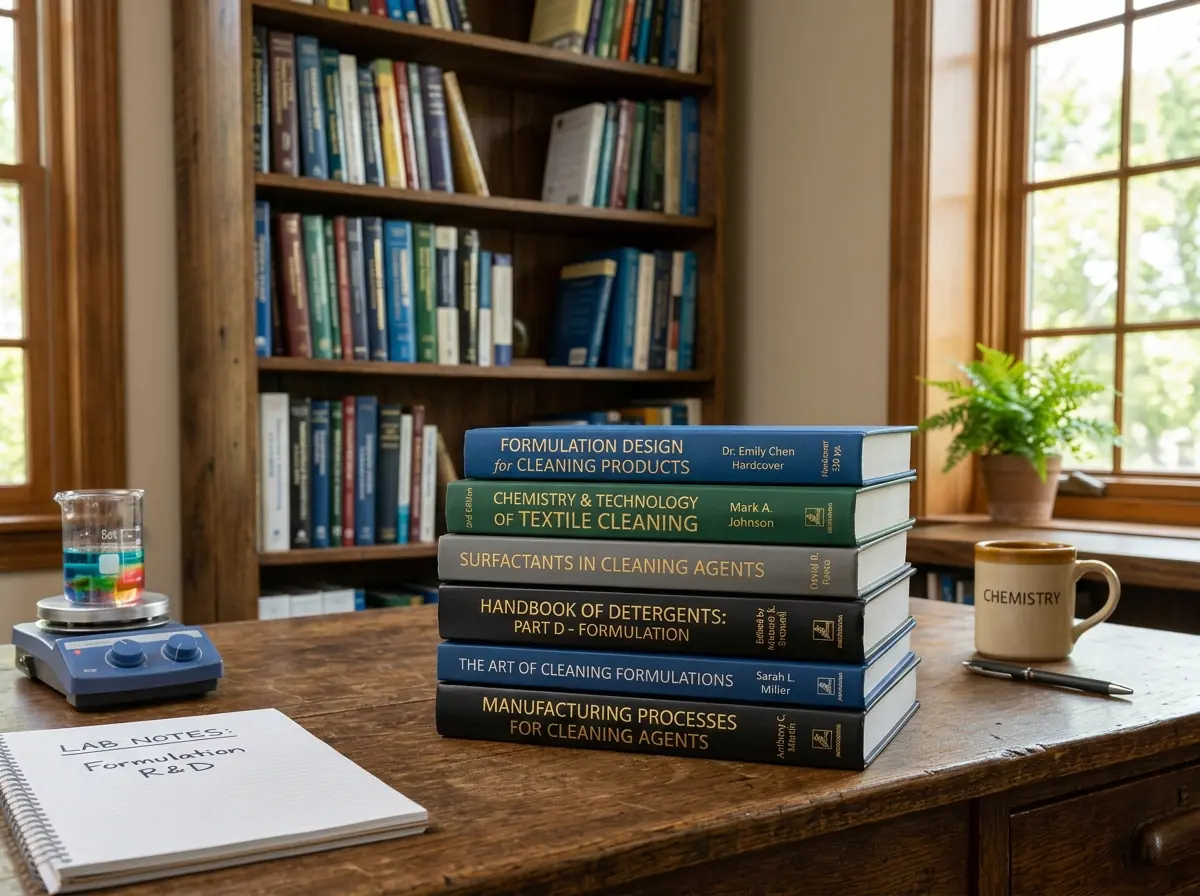
I spent almost two years mixing random stuff in buckets before I even touched a real best formulation books. I made a floor cleaner that smelled like a swimming pool gone wrong. I made a dish soap that left plates greasy. It was a mess.
Then a friend handed me an old formulation book he bought from a chemical supplier in Karachi. That book changed everything for me.
So what actually is a cleaning product formulation book? It’s basically a recipe book, but instead of cooking food, you’re cooking chemicals. It gives you exact ratios of ingredients like surfactants, solvents, thickeners, and fragrances. It tells you how much of each thing to add so your final product actually works and doesn’t fall apart in a week.
Think of it like this. If you want to bake a cake, you don’t just throw flour, sugar, and eggs together and hope for the best. You follow a recipe with exact measurements. Cleaning product formulation is the same thing, except instead of a cake, you get a working dish soap, a phenyl, a floor cleaner, or a glass cleaner.
These books usually cover a bunch of product types. Liquid detergents, dishwashing liquids, toilet cleaners, floor cleaners, car shampoos, hand wash, glass cleaners, and even industrial degreasers. Some books focus on just household items. Others go deeper into commercial and industrial cleaning chemicals.
A good formulation book won’t just give you a list of chemicals. It explains why each ingredient is there. Why you need a certain surfactant for foam. Why you need a thickener so your product doesn’t look like water. Why pH matters so much when you’re making something that touches skin or fabric.
I remember reading one book that explained why my early floor cleaner batches kept separating after a week. Turns out I wasn’t using the right emulsifier ratio. One line in that book saved me months of guessing.
Why Use Formulation Books for Cleaning Product Manufacturing?
Now you might be thinking, why can’t I just watch YouTube videos or copy some formula I found on a random website? Trust me, I tried that route first and it burned me hard.
Random online formulas are often incomplete on purpose. People selling raw materials post half formulas just to get you to buy chemicals from them. You end up with a formula missing key steps, and your product either doesn’t foam, doesn’t clean well, or separates in a few days.
A proper formulation book gives you the complete picture. It’s written by people who actually understand chemistry, not just people trying to sell you sodium lauryl sulfate.
Here’s the real reason formulation books matter so much. Cleaning product manufacturing isn’t just about mixing soap and water. It’s about ratios, pH balance, viscosity, shelf life, and safety. Get one thing wrong and your product could separate, smell bad, or even irritate skin.
When you use a proper book, you skip years of trial and error. I wasted almost a full year figuring out basic stuff that a good formulation book explains in a single chapter. Money wasted on chemicals, time wasted on failed batches, and honestly, a lot of frustration too.
Formulation books also teach you consistency. If you’re planning to sell your cleaning products, customers expect the same quality every single time. A good book teaches you to measure and mix properly so batch one and batch fifty come out the same.
Another big reason is cost control. When you understand your formula properly, you know exactly how much of each raw material you need. No more guessing and wasting expensive chemicals because you didn’t know the right ratio.
And here’s something people don’t talk about enough. Safety. Some cleaning chemicals can be dangerous if mixed wrong. Mixing certain acids and bases together can create toxic fumes. A solid formulation book warns you about these dangers before you find out the hard way in your own kitchen or small workshop.
If you’re serious about starting a cleaning products business, even a small one from your home, a formulation book isn’t optional. It’s the foundation everything else gets built on.
What Should You Look for in a Cleaning Product Formulation Book?
Not every formulation book is worth your money. I bought a couple of cheap ones early on that were basically useless. Just chemical names with no real explanation.
First thing to check, does the book explain the role of each ingredient? You need to know why a surfactant is there, not just how much to add. Second, look for books with proper ratios and percentages, not vague terms like “a small amount” or “some water.”
Check if the book covers pH testing and viscosity. These two things decide whether your product actually works or just sits there looking pretty. Also see if it talks about shelf life and preservatives. A cleaner that grows bacteria in two months is a disaster for your business.
Good books also include troubleshooting sections. Mine has a whole part about fixing separation issues and foam problems. That alone saved me so many failed batches.
Types of Cleaning Products Covered in Formulation Books
Most solid formulation books cover a wide range of products, not just one item. You’ll usually find dishwashing liquid, laundry detergent, floor cleaner, glass cleaner, toilet cleaner, and phenyl.
Some books go further into car shampoo, hand wash, degreasers, and even fabric softeners. The better ones separate household cleaners from commercial and industrial ones, since the strength and ingredients change a lot between the two.
If you’re planning to sell to homes, focus on books strong in household formulas. If you’re aiming at factories or offices, look for ones covering industrial degreasers and heavy duty cleaners instead.
Best Formulation Books for Cleaning Product Manufacturing
I won’t just throw random titles at you without explaining what actually makes a book worth buying. The best ones usually come from chemical industry publishers or experienced formulation chemists who’ve spent years in a lab, not bloggers copying old PDFs.
Look for books published by chemical trade associations or industrial chemistry authors. These usually cost a bit more, but they give real formulas with exact percentages, not rough guesses. Books that include batch calculation charts are gold too, since you can scale a formula up or down without messing up the ratios.
Some sellers on Amazon and chemical supply websites list detailed formulation guides specifically for detergents, phenyl, and dishwashing liquids. Read reviews carefully before buying. If a book has real chemists reviewing it and mentioning specific formulas that worked, that’s a good sign.
How Formulation Books Help Beginners Start a Cleaning Products Business
I started with zero chemistry background. Literally none. I failed my chemistry class in school, not joking.
A good formulation book doesn’t assume you already know everything. It starts from the basics, explains what each raw material does, and slowly builds you up to full recipes. That’s exactly what a beginner needs.
These books also save beginners from wasting money on wrong chemicals. When you’re new, it’s easy to buy the wrong surfactant or wrong thickener and waste your whole budget. A book tells you exactly what to buy and how much.
They also give you confidence. Once you make your first batch that actually works, foams properly, and doesn’t separate, you start believing you can actually run this business.
How to Choose the Right Formulation Book for Your Needs
Picking the right book depends on what you actually want to make. If you only want to make dish soap and floor cleaner for your local area, don’t buy a huge industrial book full of factory scale formulas. It’ll just confuse you.
Start small. Pick a book focused on household cleaning products first. Once you get comfortable mixing basic formulas and understand how ingredients work together, then move to bigger books covering commercial or industrial products.
Check the language too. Some books are written in heavy technical chemistry terms that only make sense if you studied chemistry in college. If you’re a total beginner like I was, look for books that explain things in plain language with simple steps.
Budget matters as well. You don’t need to spend a fortune on your first book. Get a decent beginner book, learn the basics, make a few products, and then invest in a more advanced one once you actually understand the fundamentals.
Formulation Book vs. Online Formulation Information
I get this question a lot. Why buy a book when Google has everything for free?
Here’s the truth. Free online formulas are often incomplete, outdated, or just plain wrong. Someone posts a formula without proper ratios, or they leave out a key ingredient on purpose so their product doesn’t work as well as the original.
A proper book gives you tested formulas with exact measurements and explanations behind each step. Online information is scattered across a hundred different websites, and half of it contradicts the other half.
That said, online resources aren’t useless. They’re good for quick tips or fixing a small issue in a formula you already have. But for learning the full process from scratch, a book gives you structure that random blog posts just can’t match.
Tips for Using a Formulation Book Effectively
Don’t just read a formulation book like a novel and expect to remember everything. Keep a notebook next to it and write down formulas you actually plan to try.
Always start with small batches first. Don’t mix a full 20 liter batch on your first try. Make a small 500ml test batch, check how it turns out, then scale up once you’re happy with it.
Buy a cheap pH meter and a small kitchen scale. Guessing measurements by eye ruins good formulas fast. Precision matters way more than people think when you’re starting out.
Keep track of every batch you make. Write down the exact amounts you used and how the final product turned out. This helps you fix mistakes later instead of guessing what went wrong.
Don’t be scared to fail a few times. My first ten batches were mostly garbage. That’s normal. The book gives you the formula, but your hands and practice give you the skill.
Frequently Asked Questions
Do I need a chemistry degree to use a formulation book?
No. Most beginner friendly books explain everything in simple steps. You just need patience and willingness to test batches.